Product design · Full-stack · 2026
YakuOrder from the Table
QR ordering for a Peruvian–Mexican restaurant in Hamburg — a photo-first guest app in German and English, and a kitchen screen that receives every order in real time. Designed, built and hosted by me.
Try the live demo ↗The brief
Yaku already had a strong brand and a great kitchen. Years ago I designed a Mobile Ordering Prototype for them — but it was only visuals. This time the goal was a working product the owners can test with real guests, without changing the way they get paid: guests order from the table, and pay the waiter as usual.
Where it started
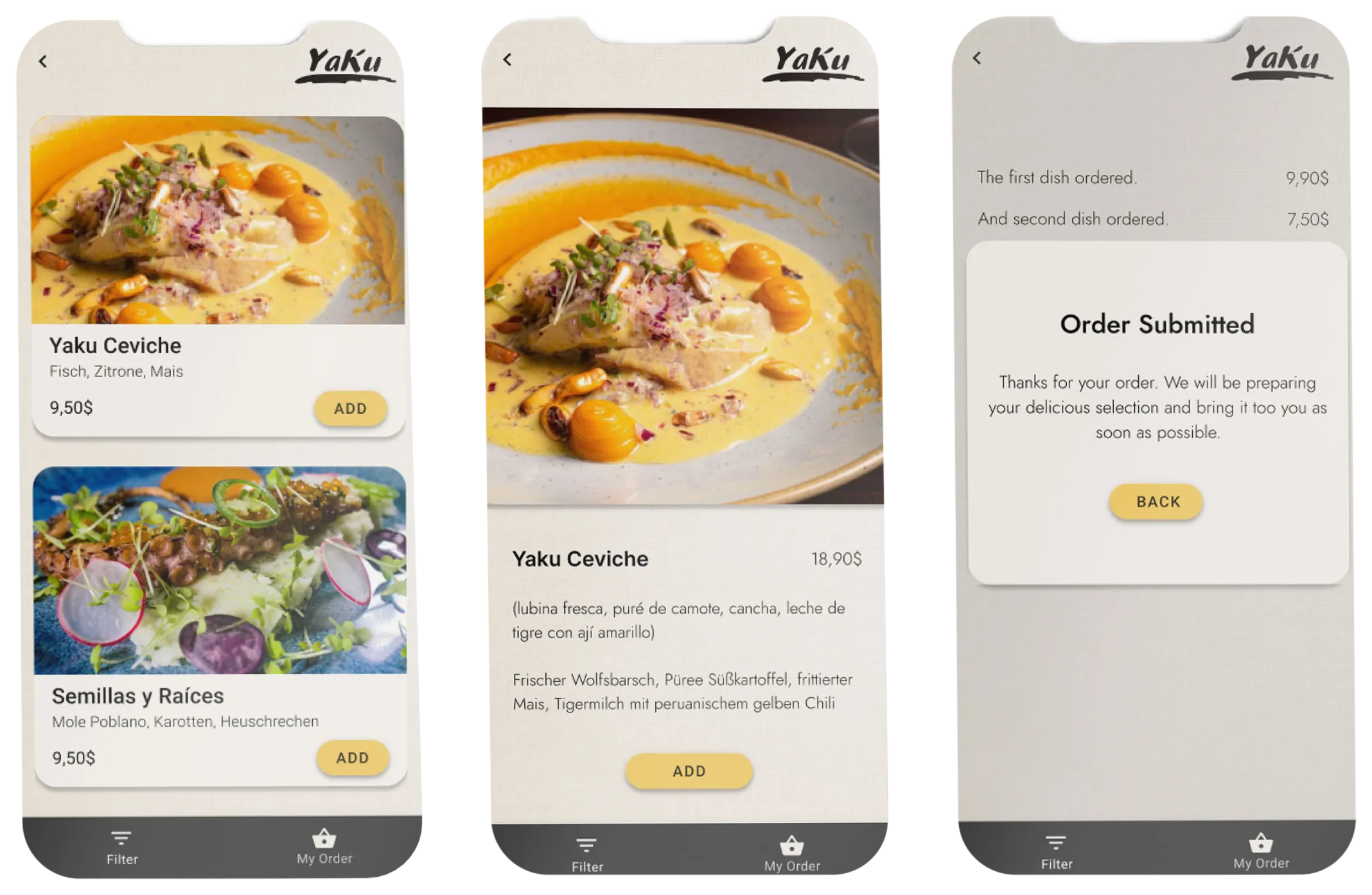 Before the app: the original Mobile Ordering Prototype — still only visuals.
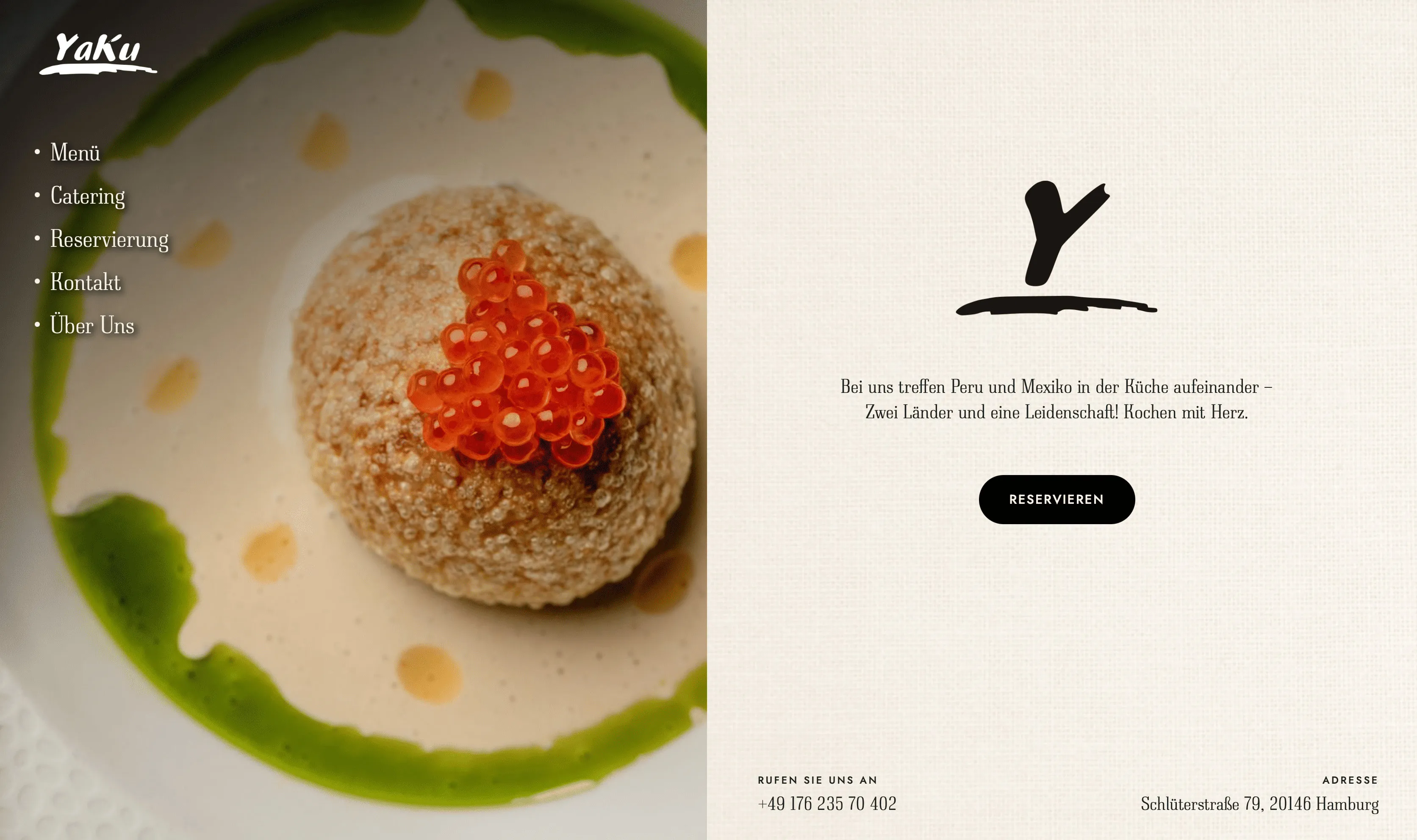 The restaurant’s responsive website — part of the brand experience I designed for Yaku.
What I built
- Guest app — scan the QR code on the table, browse a photo menu, open a dish, add a note for the kitchen, send the order and follow its status live. German and English, light and dark.
- Kitchen screen — a tablet view where new orders arrive with a sound. One tap moves an order from new to cooking to served, and the guest’s phone updates on its own. Dishes can be marked as sold out.
- QR system — every table has its own secret code, printed on a card. Without it, nobody can place an order.
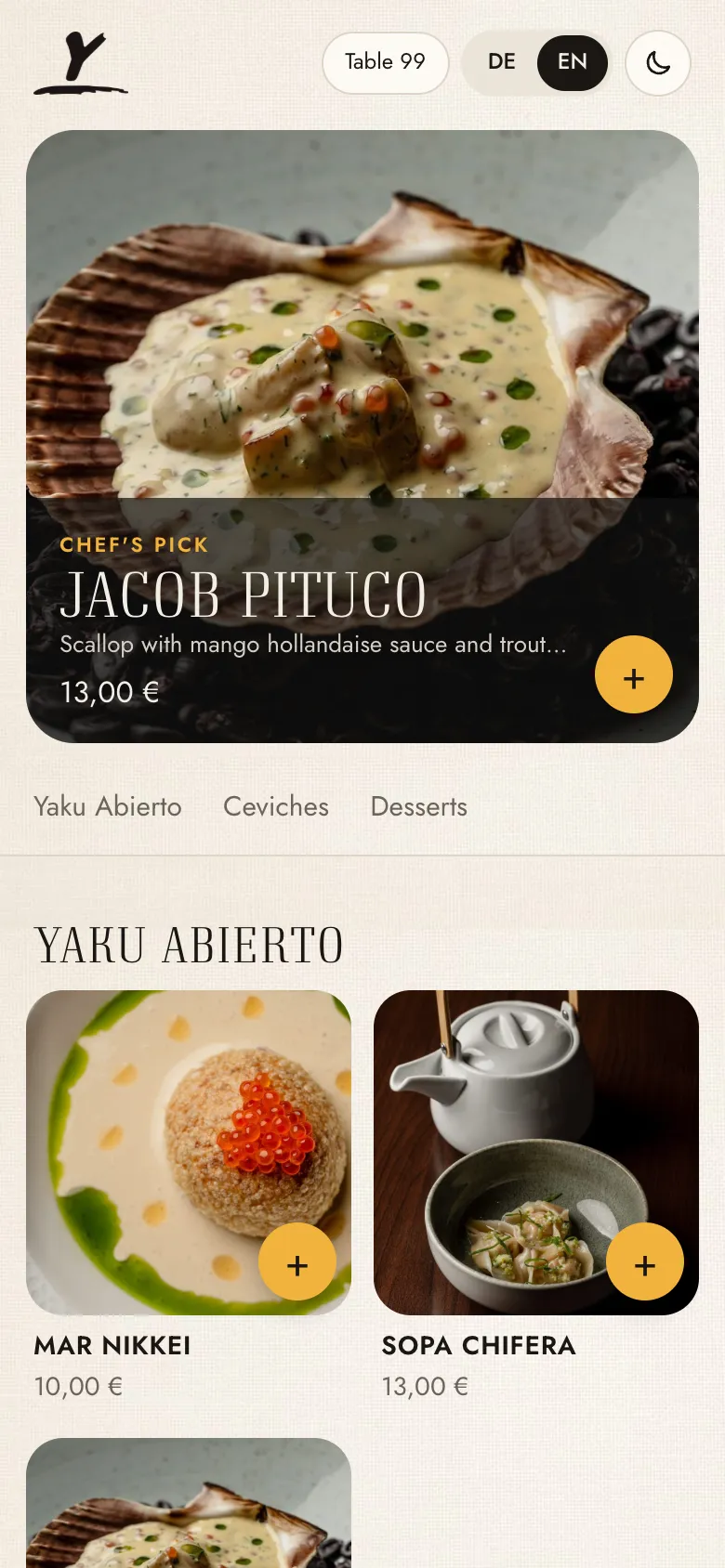
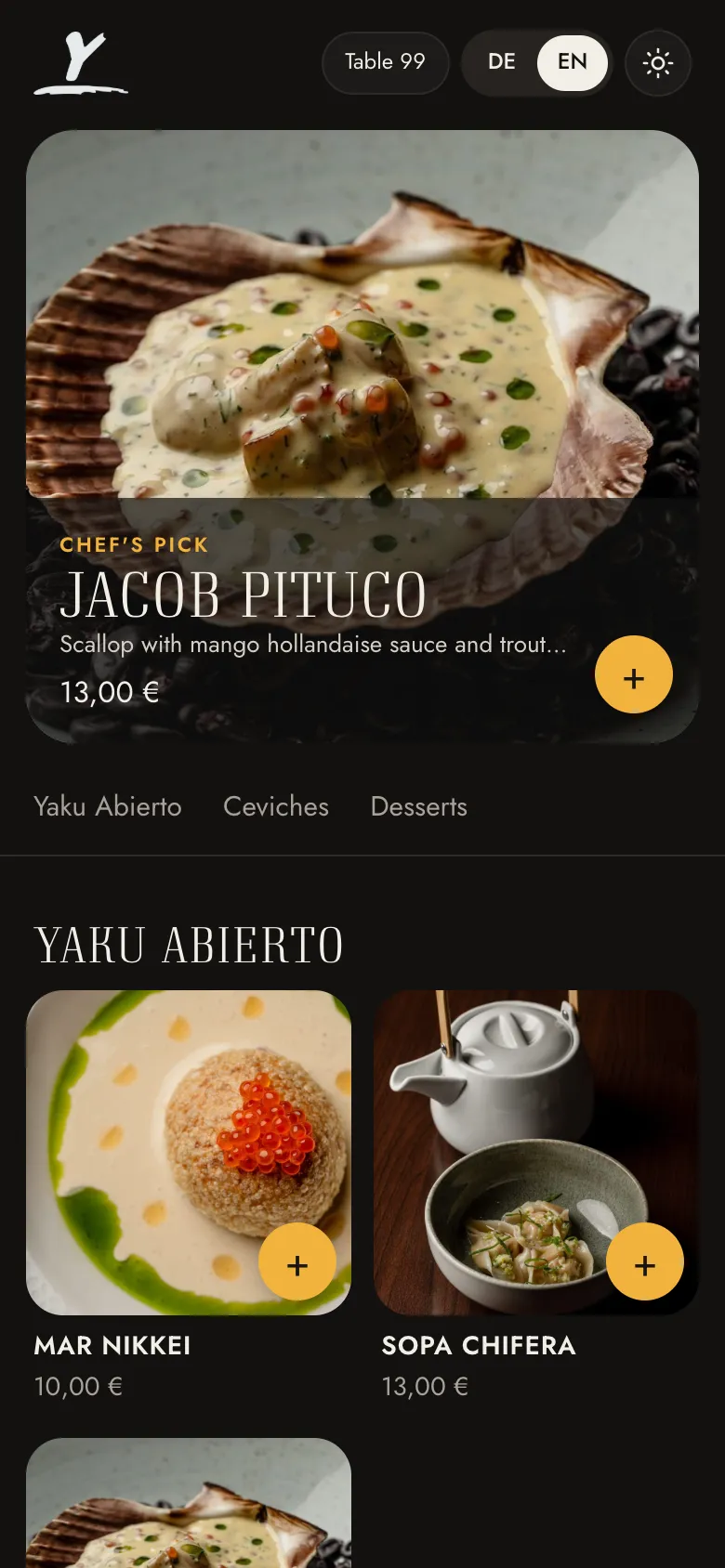 The menu in both modes: the light one uses the canvas texture of Yaku’s own website, the dark one a warm black that lets the food photography glow.
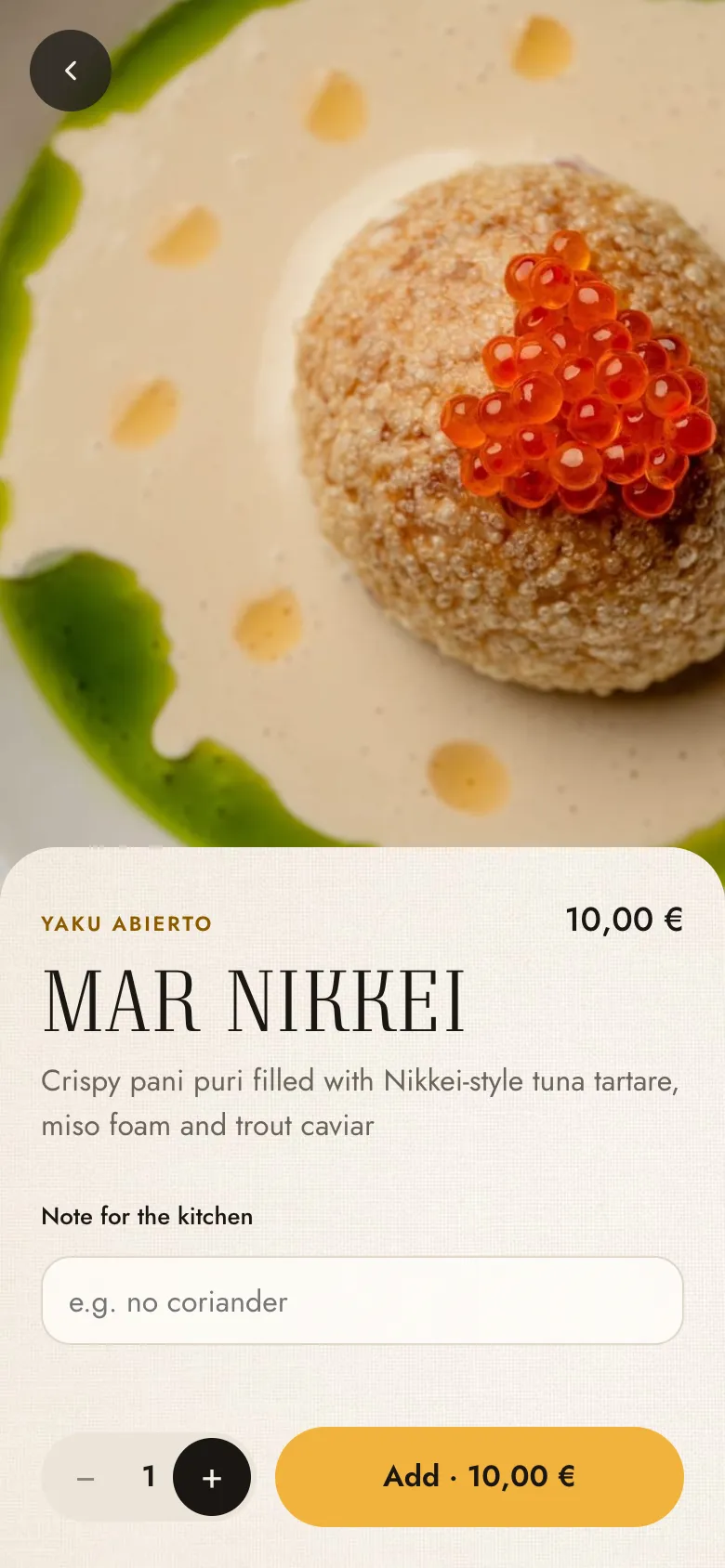
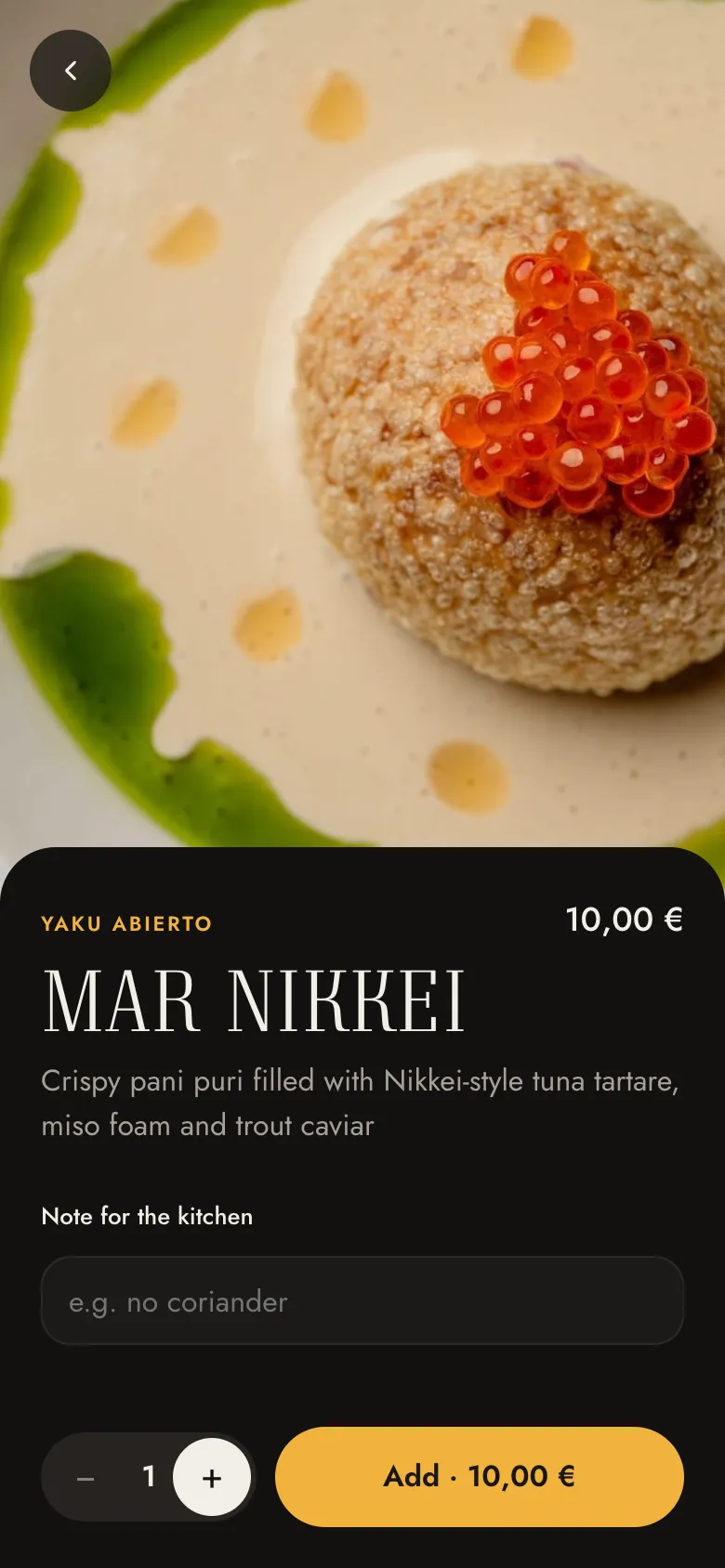 Every dish opens full-screen — the photo does the selling. Guests can leave a note for the kitchen.
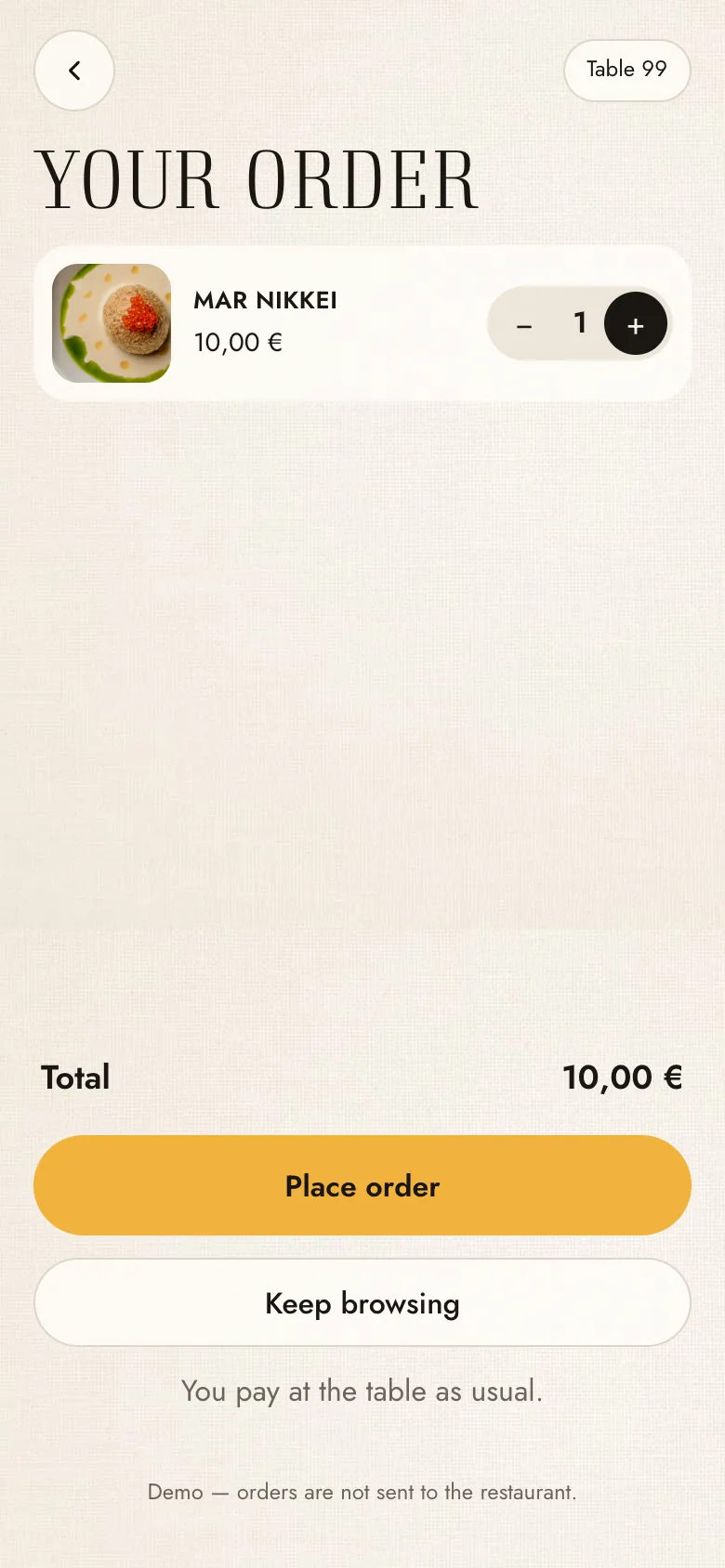
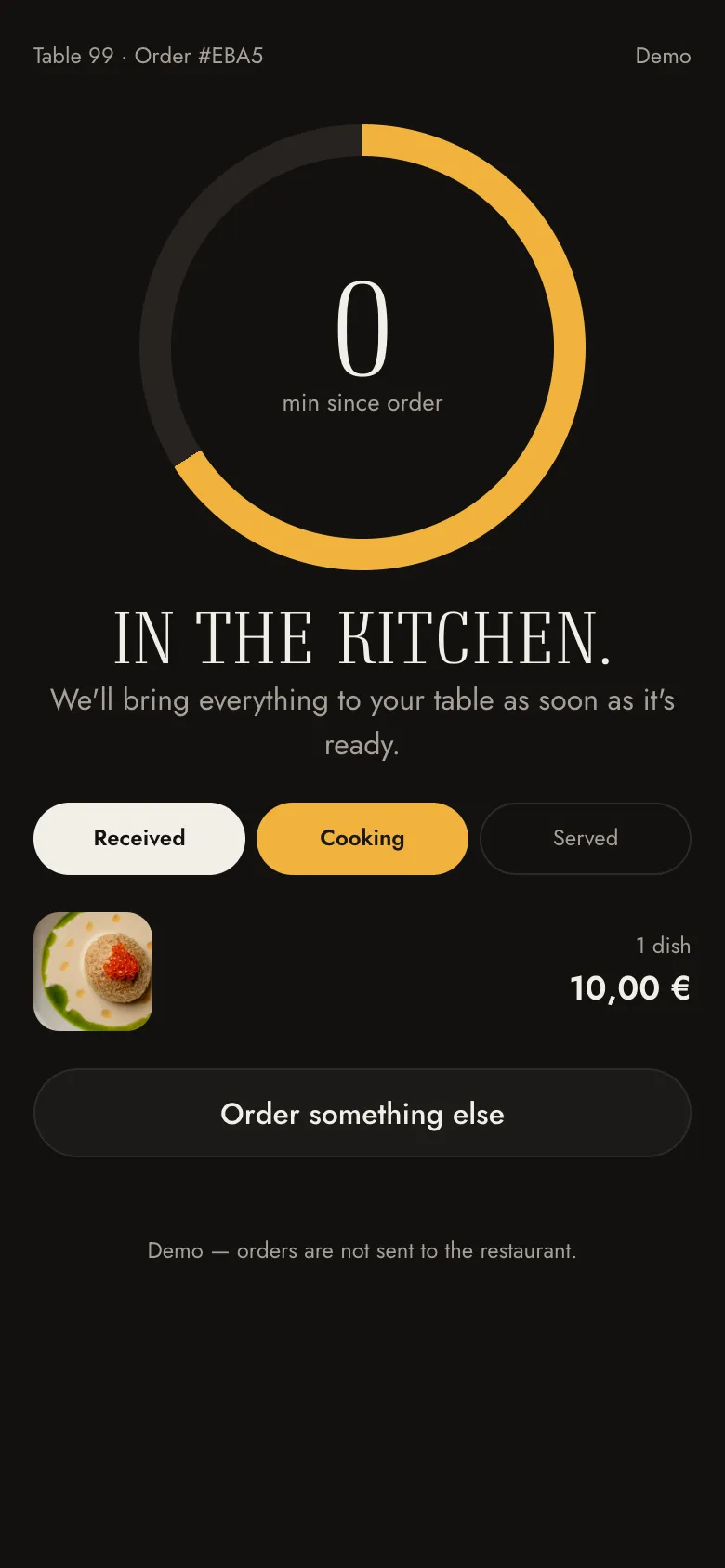 Review the order, send it, and watch the status move as the kitchen works.
Design decisions
- Photography first. The prototype only lists dishes that have a photo, and opens with a Chef’s pick. A menu is a sales tool.
- Two moods, one brand. Dark mode uses a warm black (
#121110) instead of pure black, so it sits well with the dark wood in the food photos. Light mode uses the restaurant’s own canvas texture. The accent is ají amarillo — the Peruvian yellow chili in their dishes. - Brand details. Yaku’s display typeface, and their hand-drawn “Y” as the app icon.
- A kitchen screen for busy hands. High contrast, large buttons, the table number big enough to read from across the pass, and guest notes highlighted so nobody misses “no coriander”.
Architecture
- Front-end: React + Vite, one app for guests (
/) and kitchen (/cocina). - Back-end: Supabase, self-hosted on my own Hetzner server in Nuremberg — Postgres, Realtime and Auth — behind Caddy with automatic HTTPS.
- Real time: the kitchen subscribes to order changes and receives them instantly; the guest’s status refreshes every few seconds.
- Security by default: row-level security on every table. Guests can only create an order through a database function that checks the table’s secret code and limits how many orders a table can send in a few minutes. The kitchen uses its own role — it can see and move orders, but it is not an admin. I verified the rules with automated checks acting as an anonymous visitor.
Privacy (DSGVO)
Guests don’t create accounts and no personal data is collected — just a table and some dishes. Everything runs on a server in Germany, and demo orders delete themselves every night.
Status
Live prototype, currently being tested by the owners. Next steps: allergen information for all dishes (required by EU law), a menu the restaurant can edit itself, and a connection to their till.